


Genus: Fusavirus
Family: Phenuiviridae
Genus: Fusavirus
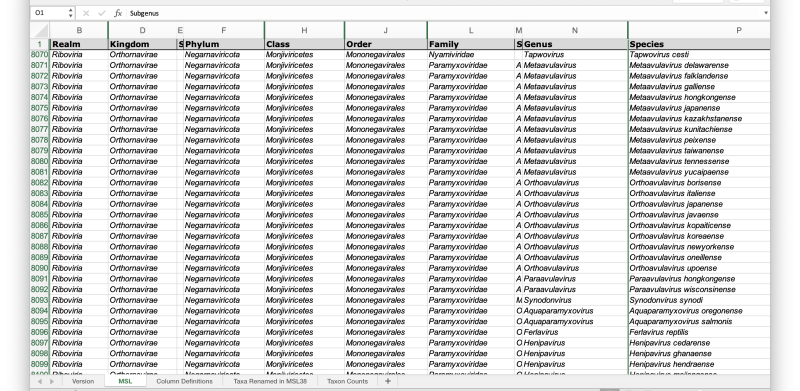
Species List: Bacilladnaviridae
Species List: Bacilladnaviridae
Virus names, the choice of exemplar isolates, and virus abbreviations, are not official ICTV designations
Exemplar isolate of the species
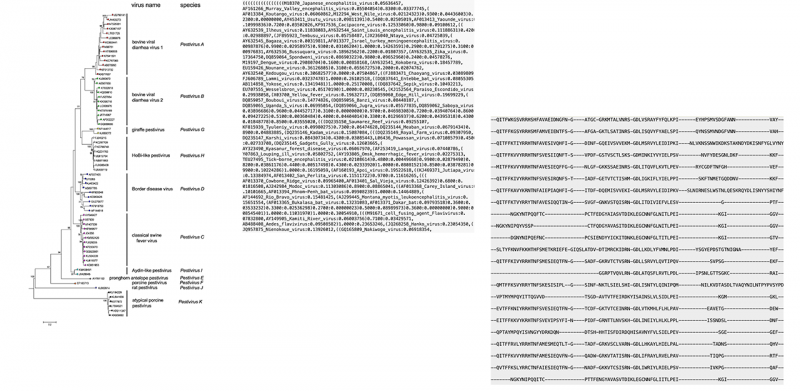
Resources: Bacilladnaviridae
Resources: Bacilladnaviridae
Figure 3 Bacilladnaviridae
Additional file
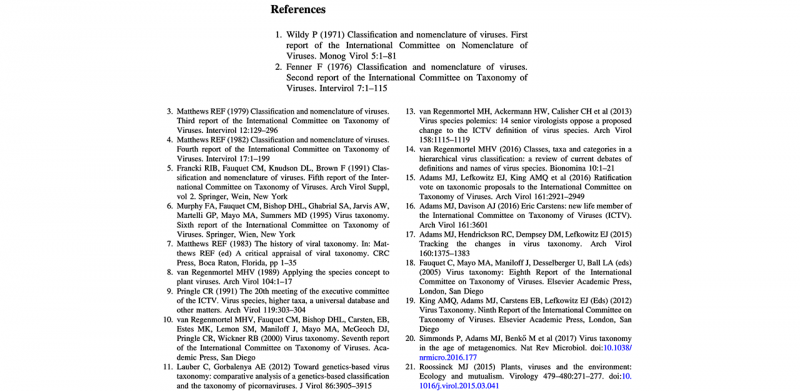
References: Bacilladnaviridae
References: Bacilladnaviridae
Darriba, D., G. L. Taboada, R. Doallo and D. Posada (2011). ProtTest 3: fast selection of best-fit models of protein evolution. Bioinformatics 27: 1164-5. [PubMed]

Citation: Bacilladnaviridae
Citation: Bacilladnaviridae
A summary of this ICTV Report chapter will be published as an ICTV Virus Taxonomy Profile article in the Journal of General Virology, and should be cited when referencing this online chapter as follows:
Arvind Varsani, Yuji Tomaru, Kenta Okamoto, Anna Munke and Mart Krupovic (2026): ICTV Virus Taxonomy Profile Bacilladnaviridae, 2026, Journal of General Virology (in press)

Authors: Bacilladnaviridae
Authors: Bacilladnaviridae
Arvind Varsani*
Biodesign Center for Fundamental and Applied Microbiomics
Center for Evolution and Medicine
School of Life Sciences
Arizona State University
Tempe, AZ 85042
Arizona
USA
Email: [email protected]
Genus: Seawadnavirus
Family: Bacilladnaviridae
Genus: Seawadnavirus
Distinguishing features
Viruses in the genus Seawadnavirus have been identified by metagenomic analysis of samples from environmental sources (ocean water and benthic sediment). There are no physico-chemical or biological data that distinguish them from other bacilladnavirids. The genus is delineated on the basis of Rep protein phylogeny.
Genus: Puahadnavirus
Family: Bacilladnaviridae
Genus: Puahadnavirus
Distinguishing features
Viruses in the genus Puahadnavirus have been identified by metagenomic analysis of samples from environmental sources (benthic sediment). There are no physico-chemical or biological data that distinguish them from other bacilladnavirids. The genus is delineated on the basis of Rep protein phylogeny.
Genus: Protobacilladnavirus
Family: Bacilladnaviridae
Genus: Protobacilladnavirus
Distinguishing features
A number of viruses in the genus Protobacilladnavirus have been isolated and their physico-chemical and biological properties investigated (see family section). The genus is delineated on the basis of Rep protein phylogeny.