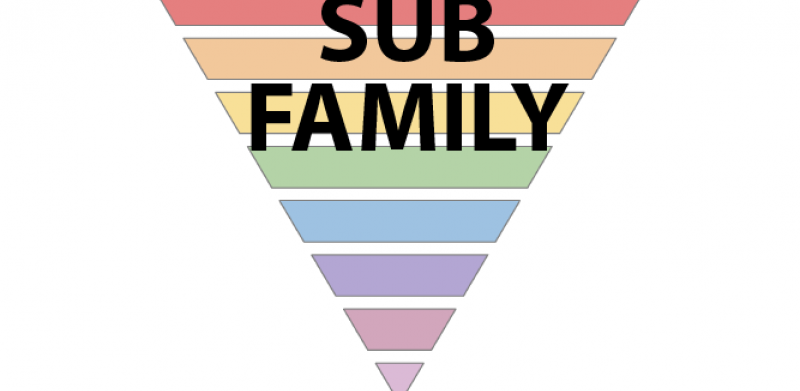
Subfamily: Orthoparamyxovirinae
Family: Paramyxoviridae
Subfamily: Orthoparamyxovirinae

Bert Rima, Anne Balkema-Buschmann, William G. Dundon, Paul Duprex, Andrew Easton, Ron Fouchier, Gael Kurath, Robert Lamb, Benhur Lee, Paul Rota and Linfa Wang
A summary of this ICTV Report chapter has been published as an ICTV Virus Taxonomy Profile article in the Journal of General Virology, and should be cited when referencing this online chapter as follows:
Chiapello, M., J. Rodríguez-Romero, M. A. Ayllón and M. Turina (2020). Analysis of the virome associated to grapevine downy mildew lesions reveals new mycovirus lineages. Virus Evol 6: veaa058. [PubMed]
Dàohóng Jiāng (姜道宏)*
Mymonaviridae Study Group Chair
State Key Laboratory of Agricultural Microbiology
College of Plant Science and Technology
Huazhong Agricultural University
Wuhan 430070
China
E-mail: [email protected]
Dàohóng Jiāng (姜道宏), María A. Ayllón, Shin-Yi L. Marzano, Hideki Kondō (近藤秀樹) and Massimo Turina
Members of the genus Hexartovirus infect sea lice (copepods) or barnacles.
A summary of this ICTV Report chapter has been published as an ICTV Virus Taxonomy Profile article in the Journal of General Virology, and should be cited when referencing this online chapter as follows: